Author Archives: LBRF

Congratulations!

Members of the lab have had a lot to celebrate in the past couple of months:

Marion Che was accepted into Medicine at Dalhousie University. Marion will be starting in September after some world travel in July and August!

MSc student Alana Fleet was elected President of the Dalhousie Association of Graduate Students (DAGS). In addition to advancing the quality of graduate studies at Dalhousie, Alana also now gets a great discount at the Grad House!

Lastly, congratulations are in order for lab director Dr. Shaun Boe, who was recently awarded a Junior Career Research Award from the Heart and Stroke Foundation of Canada. This award dedicates 75% of Dr. Boe’s time to the research undertaken in the lab.

Come work with us!

97566

The lab has openings for MSc and PhD students. Qualified students can come from a variety of academic backgrounds including kinesiology, health sciences, psychology, neuroscience and engineering (to name a few!). Qualified students receive full funding to support their MSc or PhD program. Details on our programs can be found here, or contact Lab Director Dr. Shaun Boe directly (s.boe@dal.ca).

Neurophysiology Laboratory receives CFI infrastructure funding

Dr. Shaun Boe is one of 5 recipients from the Canadian Foundation for Innovation (CFI) Leaders Opportunity Fund. The funding, announced September 1, 2011, will provide infrastructure to support the investigation of basic and applied neurophysiology and rehabilitation post-stroke. The infrastructure will be used to outfit the Neurophysiology Laboratory and will include an electroencephalography system, two transcranial magnetic stimulators and a neuro-navigation unit. Other equipment will include an advanced system to measure muscle activity (electromyography). With the CFI contribution of $125,000, the total value of the award with matching funds is $381,141.

Clinical Applications

cimt-0440

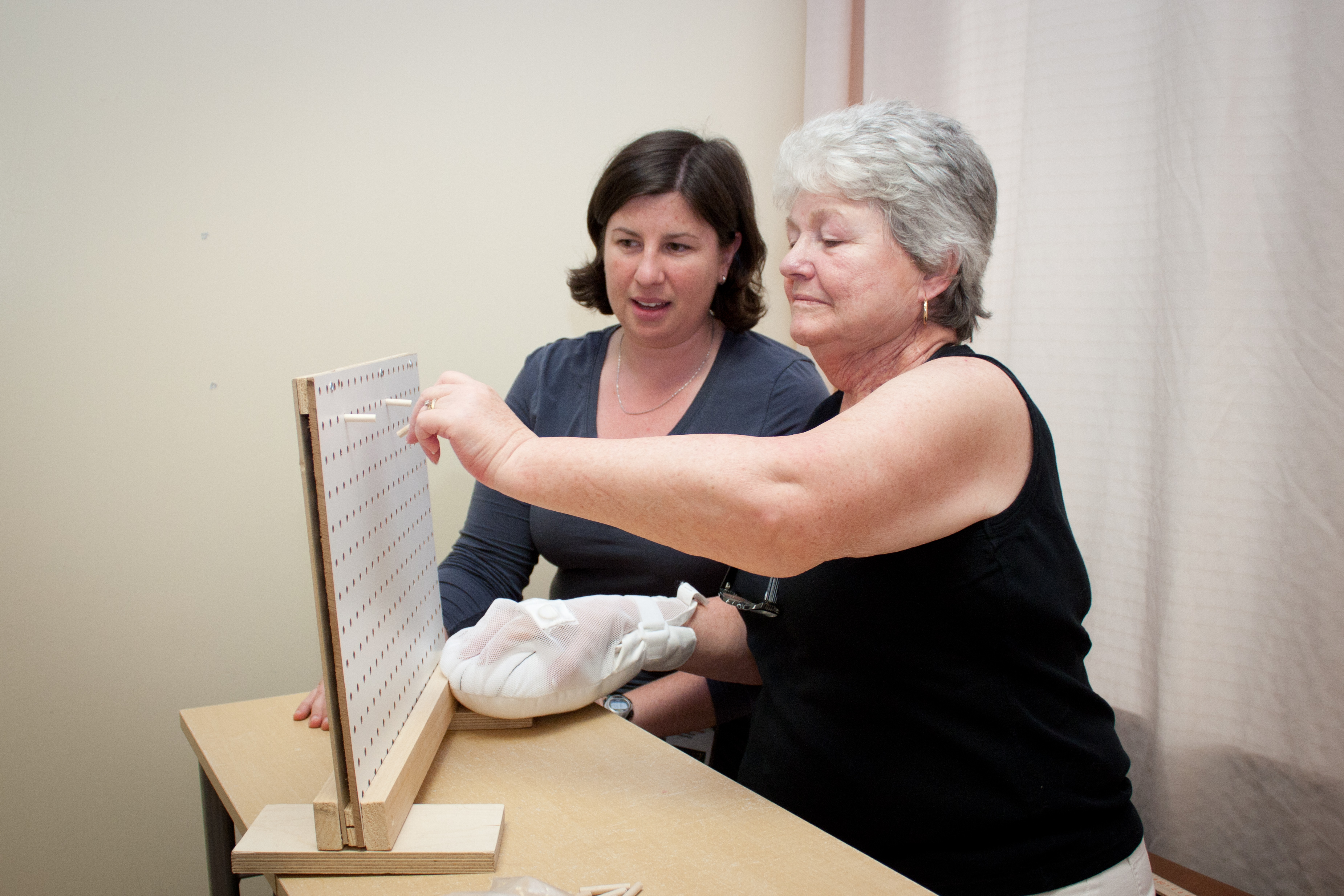
In addition to understanding mechanisms of brain recovery, clinical studies in the laboratory investigate both the effectiveness and feasibility of treatments designed to aid in recovery. Here, one of our clinical collaborators works with a patient involved in the ACmCIMT trial. The purpose of this trial was to see if mCIMT (modified constraint induced movement therapy, a therapy used to help with recovery of arm and hand function) was effective and feasible when performed in a clinical setting and in a manner similar to the way rehabilitation services are delivered in Canada.

Magnetoencephalography

meglab-1071

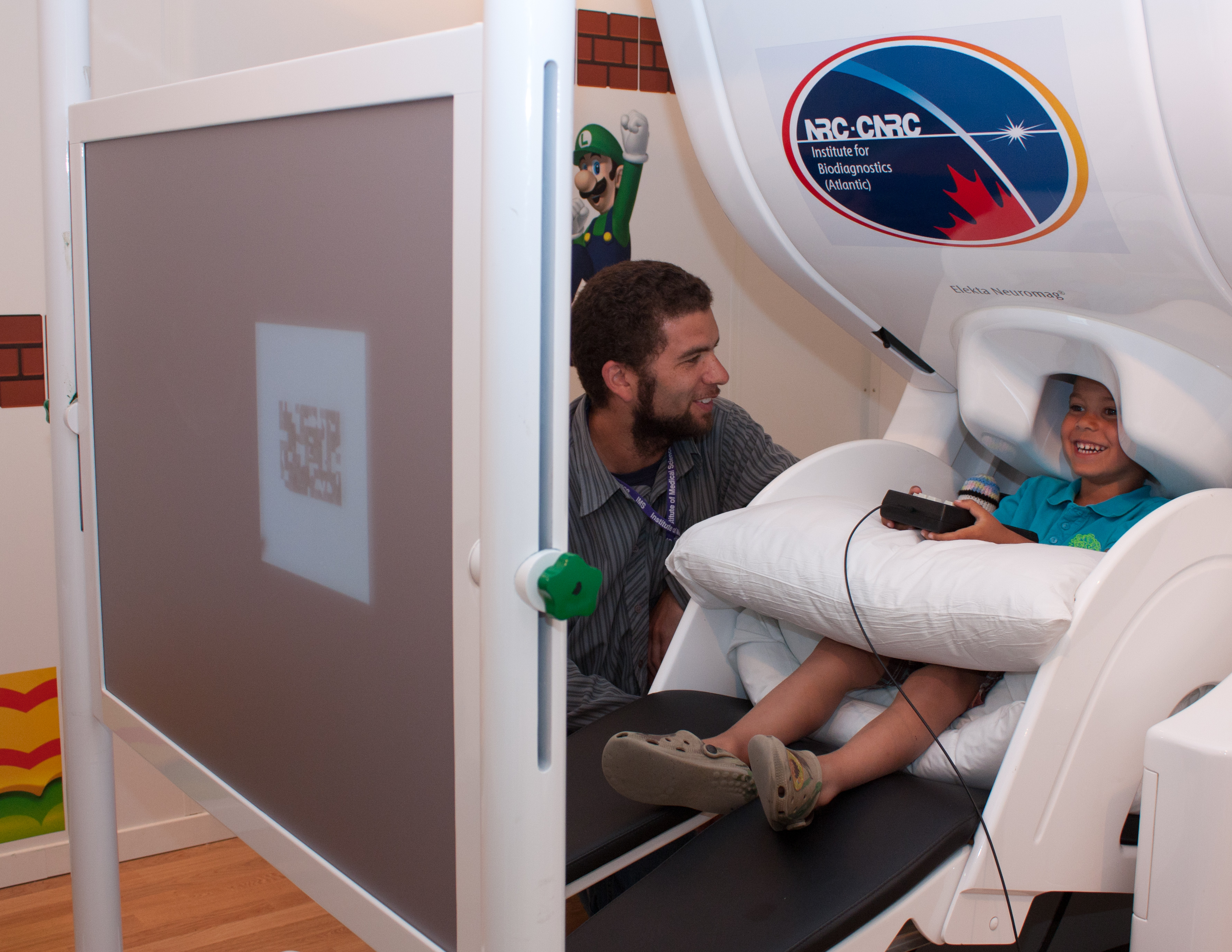
Magnetoencephalography (MEG) is one of several neuroimaging modalities used in studies performed by members of the laboratory. Neuroimaging techniques such as MEG, magnetic resonance imaging (MRI), and electroencephalography (EEG) aid lab members in their work to better understand the mechanisms of brain recovery.

Advanced Computing Techniques

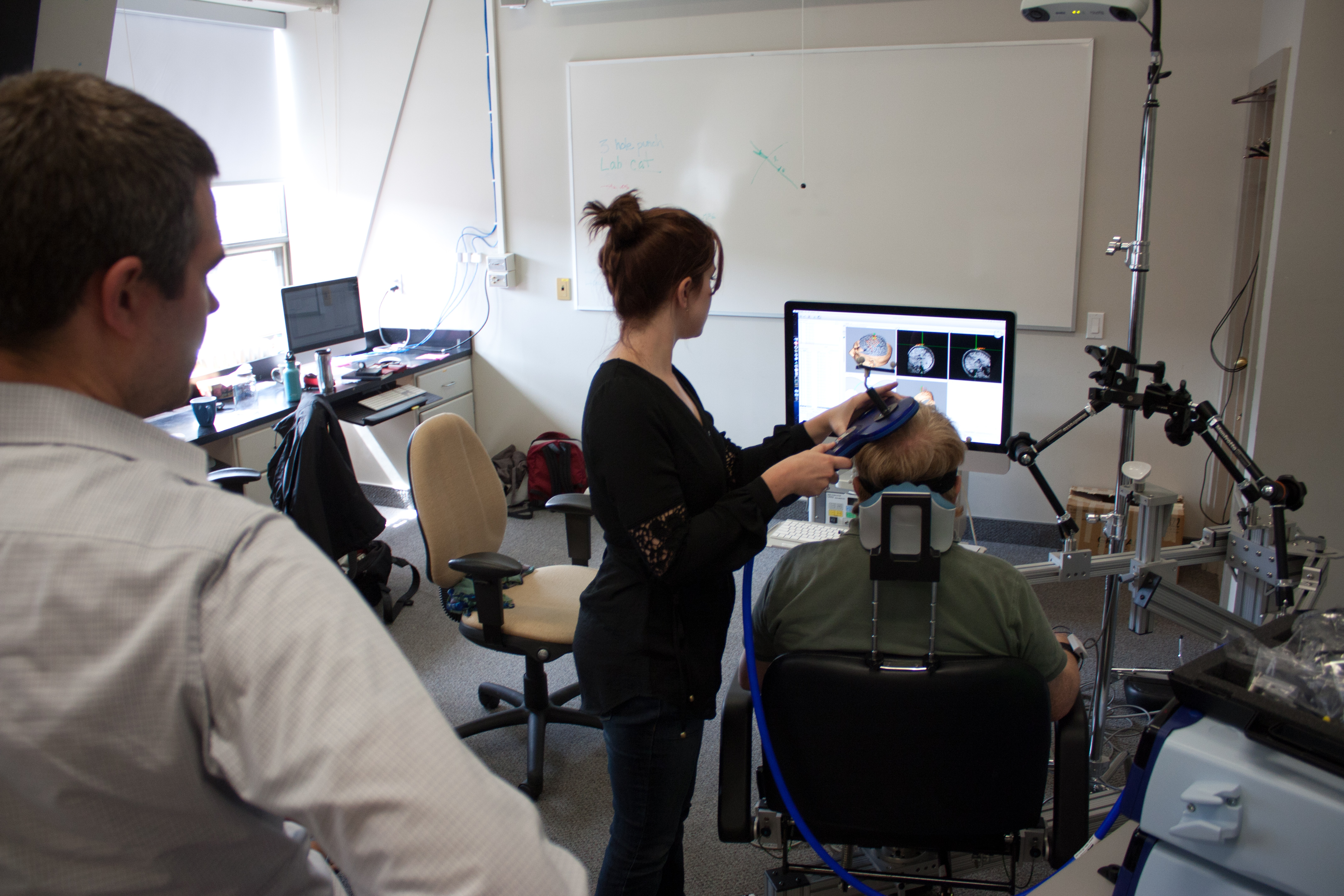
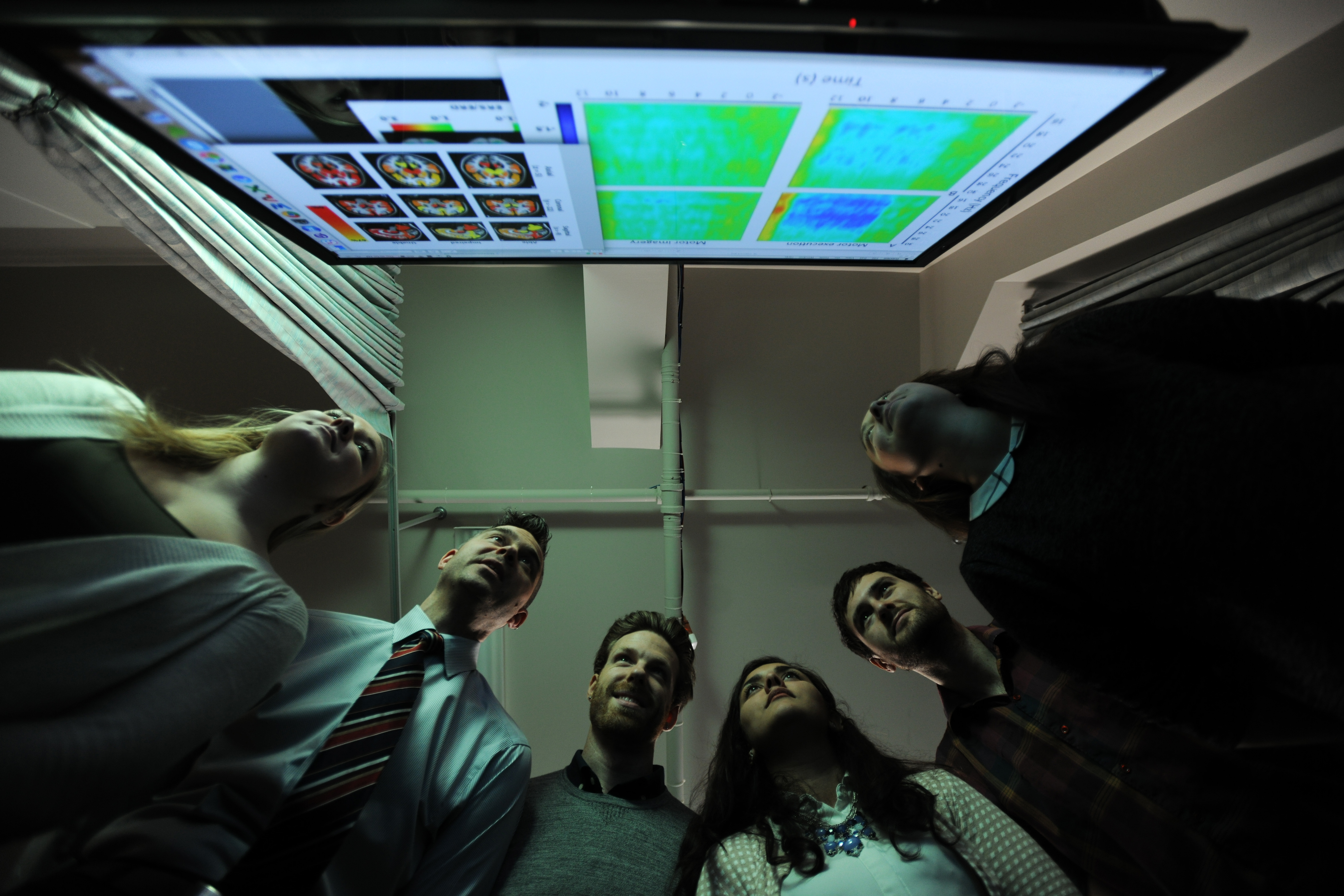
Members of the laboratory use advanced brain imaging software to explore how different parts of the brain interact to control movement. Current projects in the lab use anatomical MRIs to guide the location of cortical stimulation using TMS.

« Older Entries Recent Entries »